Ports and Propaganda, Big Brands are Blaming You for Their Pollution
Somewhere between tote bags with green leaves printed on them and fashion brands releasing their yearly “impact reports,” sustainability became less of a practice and more of a personality. It’s a word that looks good on a billboard and sounds good in a commercial voice over, but the more the industry uses it, the less it seems to mean. And honestly? That’s kind of the point.
Fashion will, of course, talk circles around sustainability before it ever tells you what’s actually happening behind the curtains of its supply chain. And once you look at the real picture, the farms, the factories, the freight routes, and the waste streams, the whole eco friendly façade starts unraveling like the seams on the fast fashion garments it tries to hide.
Solomon Noi, the city’s head of waste management, reckons that 40% of the used clothing coming through Accra’s port ends up as garbage. A landfill that was supposed to have a lifespan of 25 years filled up in three.https://t.co/TenL37Mkjm via @BW
— Valérie Boiten (@Valerie_Boiten) November 9, 2022
Brands love to say things are “ethically made” or “responsibly sourced,” as if those phrases will just magically erase the realities of global manufacturing. Unfortunately, the truth is far less glamorous. Most brands can’t map their supply chain beyond tier one. As in beyond the sewing floor. Ask them who dyed the fabric, where the cotton was grown, which mill spun the yarn, where the wastewater went after the dyes washed out. Silence.
Tiers 3 to 5, the farms, mills, tanneries, dye houses, are where the majority of contamination, forced labor, and environmental devastation happen. But because those layers sit at the bottom of the supply pyramid, they stay invisible on purpose. And textile production so often discharges untreated dye and wastewater, a serious environmental justice issue in manufacturing regions. Because its always been easier to market a feel good slogan than admit your fabric mill dumps carcinogenic dye sludge into the nearest river.
Studies from environmental health researchers and global textile watchdogs have shown this over and over. The worst damage happens where brands don’t bother to look. Which is... convenient. Because if you don’t see it, you don’t have to fix it.
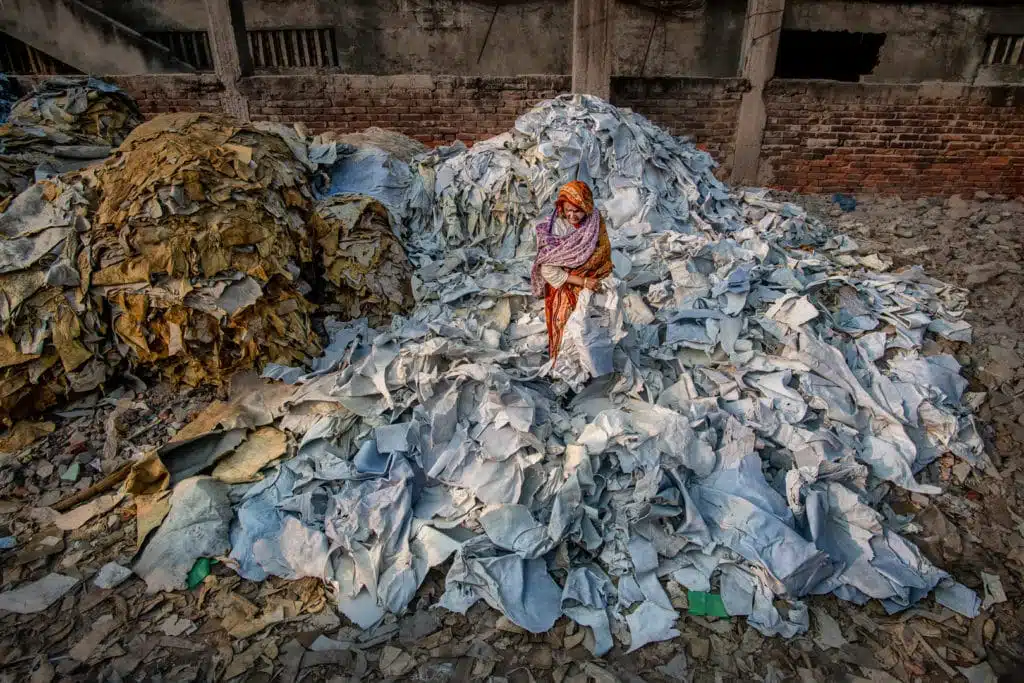
Global supply chains were built for speed and profit, not moral clarity. And that’s exactly why greenwashing comes so easily.
You’ll see a tag that says “eco friendly fabric”, and then find out the shirt has visited more continents than you have before it ever even hit the store floor. You’ll see “recycled polyester” written in cute lowercase font, and then learn that recycled polyester still sheds thousands of microplastic fibers every wash cycle, straight into global waterways and from there into your body. It’s environmental optimism with the receipts conveniently shredded. And just a single load of synthetic clothing can release literal hundreds of thousands of microplastic fibers, contributing to ocean pollution.
Brands know consumers want to feel better about their purchases, not necessarily challenge the system that makes those purchases possible. So they give you the aesthetic of sustainability, not the reality. Green color palettes. Earth toned marketing. Nature imagery moodboards. Leaves. Always the leaves. So many leaves... everywhere. Sustainability becomes a vibe, not a verifiable practice.
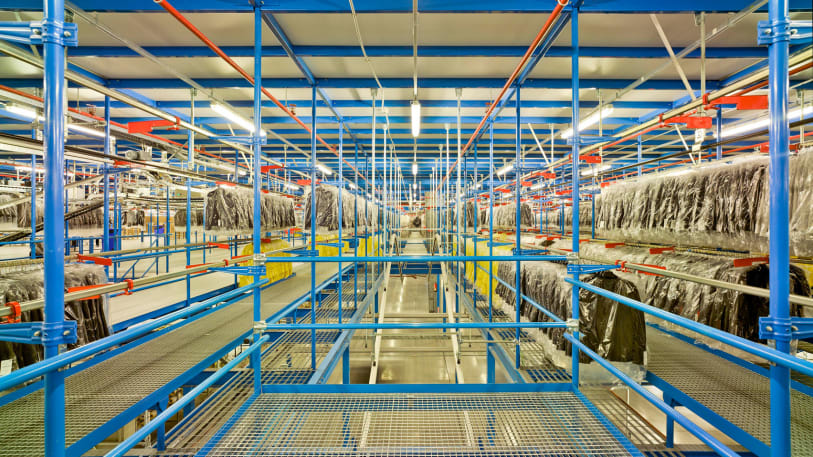
Whenever sustainability gets discussed online, the blame always lands on individuals. Fast fashion hauls. Overconsumption. The shopper, the wearer, the TikTok girlie. The usual suspects, or so the industry would like you to believe. That narrative is very convenient for brands because it distracts from the actual villains of fashion’s carbon footprint, their cargo ships, freight flights, and port logistics.
Ports are responsible for some of the dirtiest emissions tied to the textile industry. The ships carrying your “sustainable capsule collection” are often powered by the filthiest petroleum fuels legally allowed. But you rarely hear brands talk about that part. They just keep the conversations focused on the consumer, because it’s always easier to shame someone buying a $12 dress than to address the fact that the same dress generates more pollution in transit than the buyer will generate all month. If a company is preaching sustainability without releasing its transport emissions, it’s not sustainable. It’s narratively convenient.
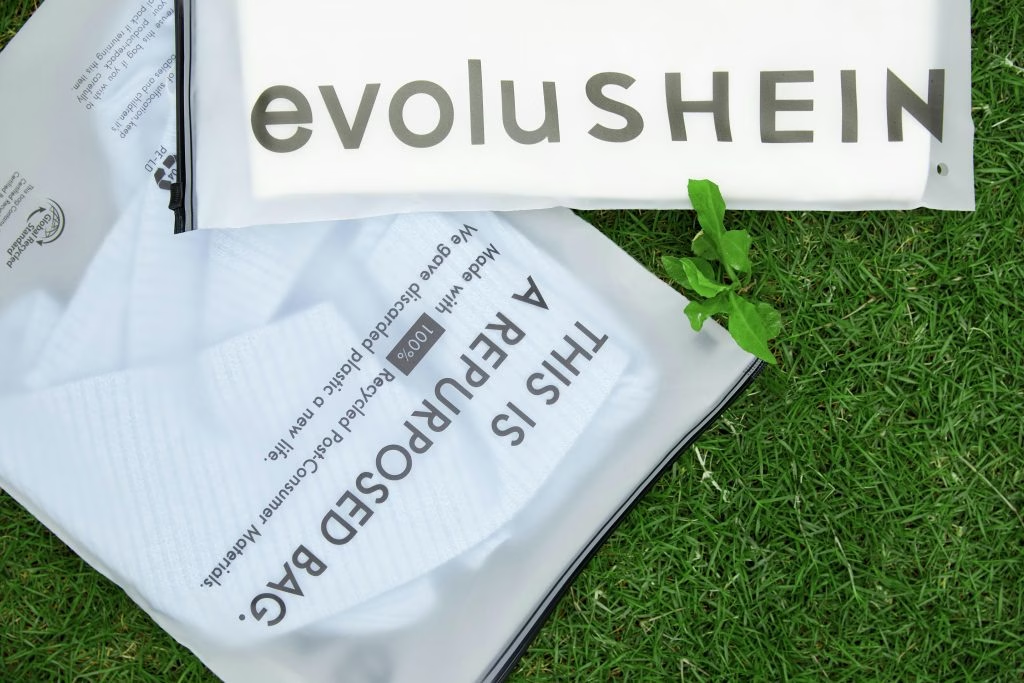
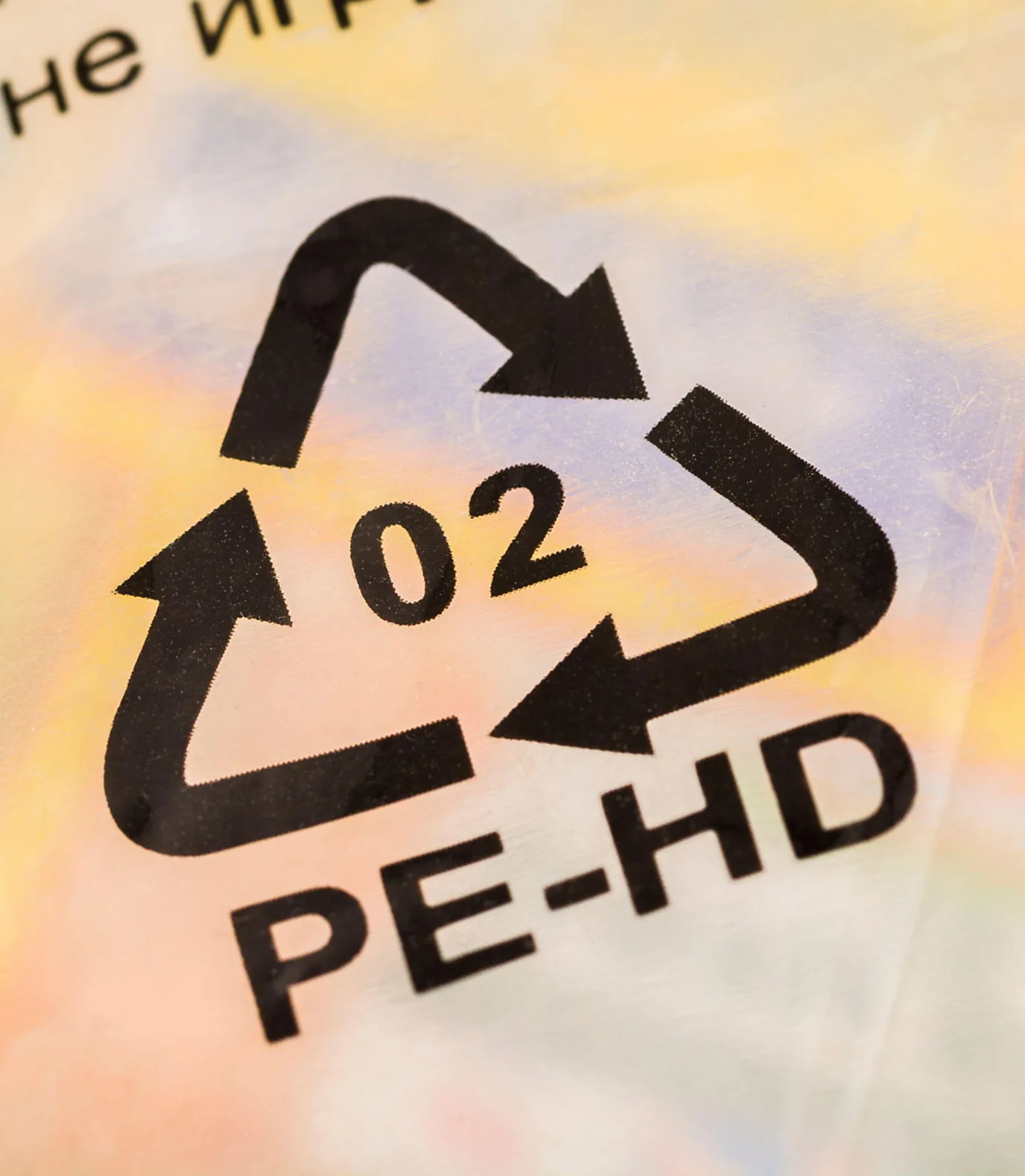
Here’s a fun fact that should honestly tell you everything you really need to know, eco messaging is usually handled by the marketing department, not the supply chain team. Which means sustainability isn’t a practice, it’s just a pitch. Take “made with recycled materials.” Sounds nice, right? Except it usually means 5 or 10 percent recycled content blended with virgin plastic. Just enough to legally make the claim. Not enough to make an impact. Take carbon offsets. Brands toss money at tree planting funds like it’s confetti and call themselves carbon neutral, even though offsets don’t erase emissions. More often, they delay accountability. Take those glossy, polished looking “sustainability reports.” They’re filled with vague verbs like “working toward,” “investing in,” “exploring,” or “moving closer to”. All very strategically nonspecific, all very carefully non committal. Very rarely do they include hard numbers, supplier maps, water usage data, or wastewater disclosures. But they certainly do include very aesthetic charts with pastel palettes.
Thrifting and resale apps have never been more popular, and many brands are trying their absolute best to ride that wave. Now you’ll hear them say things like “We support circular fashion!” and “We’re committed to extended garment life cycles!” Meanwhile, the only reason thrifting exists at this scale is because brands churn out clothes like they’re printing newspaper flyers. The resale ecosystem is overflowing because the primary market is overproducing. Brands absolutely adore to benefit from the optics of sustainability without addressing the root cause, their own overproduction. A circular economy can’t exist if brands keep treating clothing like single use plastic.
People aren’t stupid. They can tell when something’s real and when something’s a press release. And increasingly, consumers recognise these things. People understand now that most “sustainable collections” are marketing armor. That most “eco-friendly fabrics” come with invisible pollution costs. That most brands care more about optics than impact. That most environmental language is legally engineered to be vague. And honestly? That awareness is why sustainable fashion feels more hollow every year. When the messaging is louder than the measurable change, people start to tune out.
Because transparency forces accountability. And accountability forces change. And change forces cost. Real sustainability requires things like paying workers fairly, slowing down production, using less toxic dyes, reducing shipping distances, switching to renewable energy, auditing suppliers all the way back to the farm, producing less clothing, accepting lower profit margins, all things that cost more time, energy, and money. And you can imagine how many executives actually want to do that.
It’s far easier, and much cheaper, to release a “Conscious Collection” made from 7% recycled polyester and call it a day.
Fashion doesn’t have a sustainability problem. It has an honesty problem. Every environmental crisis associated with fashion, from microplastic pollution to river poisoning to garment-worker exploitation, happens because the supply chain is built on opacity. Brands hide the real cost of clothing so the consumer doesn’t have to think about it.
But the planet feels it, the workers feel it, and the water feels it. And no amount of green graphics or eco-slogans can cover that up forever.

Citations & Sources
- Administrator, G. B. (2024, December 11). Corporations vs. Consumers: Who is really to blame for climate change? Global Social Challenges. Retrieved December 3, 2025, from sites.manchester.ac.uk/…
- Bick, R., Halsey, E., & Ekenga, C. C. (2018). The global environmental injustice of fast fashion. Environmental Health, 17(1), 92. https://doi.org/10.1186/s12940-018-0433-7
- Fast fashion: EU laws for sustainable textile consumption | Topics | European Parliament. (n.d.). Topics | European Parliament. Retrieved December 3, 2025, from www.europarl.europa.eu/…
- Greenpeace International. (2021, November 23). Detoxing fashion supply chains is a game changer, but without regulation climate damage by the industry continues - Greenpeace International. Retrieved December 3, 2025, from www.greenpeace.org/…
- Greenpeace International. (2023, September 22). How fast fashion fuels climate change, plastic pollution, and violence - Greenpeace International. Retrieved December 3, 2025, from www.greenpeace.org/…
- Johns, L., Morrison, H., Davis-Peccoud, J., & Carbinato, D. (2023, June 5). How brands can sell to environmentally conscious nonconsumers. Harvard Business Review. Retrieved December 3, 2025, from www.hbr.org/…
- Lai, O. (2024, March 4). 7 Fast fashion companies responsible for environmental pollution. Earth.Org. Retrieved December 3, 2025, from https://earth.org/fast-fashion-companies/
- Maiti, R. (2025, January 20). Fast Fashion and its environmental impact in 2025 | Earth.Org. Earth.Org. Retrieved December 3, 2025, from https://earth.org/fast-fashions-detrimental-effect-on-the-environment/
- Park, W. (2022, May 6). How companies blame you for climate change. Retrieved December 3, 2025, from www.bbc.com/…
- Plastic Polllution Coalition. (2024, December 19). Buy Now! How Big Brands are Trashing the Planet. Plastic Pollution Coalition. Retrieved December 3, 2025, from www.plasticpollutioncoalition.org/…